
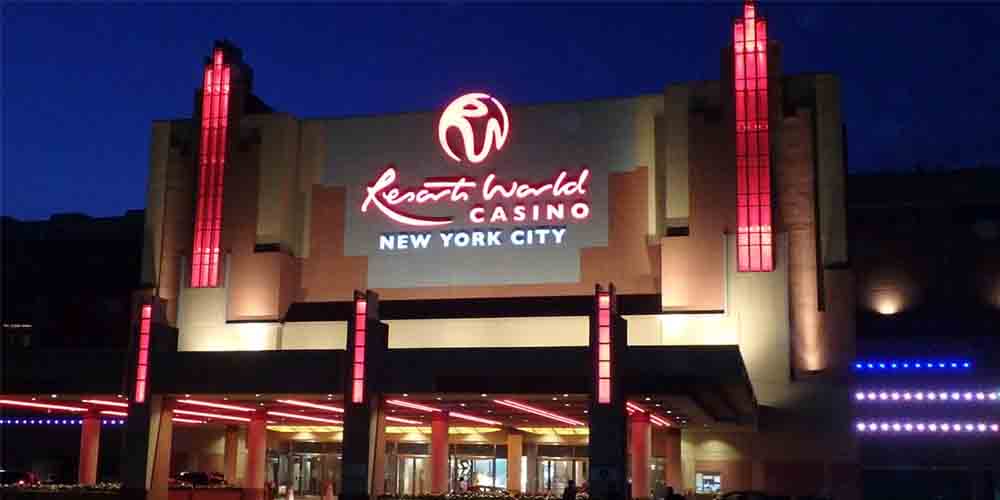

New York City is entering a new era of gaming as Resorts World New York City prepares to open the city’s first full-scale casino on April 28. The development marks a historic milestone, bringing live table games—long absent within city limits—to one of the world’s most influential urban centers.
Located in Queens near the Aqueduct Racetrack, the upgraded venue transforms what was once a slots-only facility into a comprehensive casino experience. The property is expected to feature more than 240 table games alongside thousands of slot machines, offering options such as blackjack, roulette, baccarat, and craps.
This launch also gives Resorts World a significant competitive edge. While other approved casino projects in New York City are still years away from completion, the Queens-based operator will effectively dominate the local market in the near term. Reports indicate rival casinos are unlikely to open until around 2030, giving Resorts World roughly a four-year—or longer—head start in establishing its customer base and operational footprint.
Beyond gaming, the project reflects broader economic ambitions. The expansion is tied to job creation, increased tax revenue, and a shift in how residents and tourists engage with entertainment in the city. For decades, players seeking full casino experiences traveled to neighboring states. Now, that dynamic is poised to change dramatically.
Online NYC Gambling
Despite the arrival of a full casino in New York City, online gambling remains a complex issue within the state. While certain forms of online betting—such as sports wagering—are regulated, comprehensive online casino gaming has yet to be fully legalized. This gap has led many players to explore offshore platforms.
Offshore gambling sites operate outside U.S. jurisdiction, offering a wide range of casino games, including slots, table games, and live dealer experiences. These platforms often appeal to players due to their accessibility and extensive game libraries, especially in regions where domestic online casino laws are still evolving.
However, the offshore market comes with important considerations. Because these operators are not regulated by U.S. authorities, consumer protections can vary significantly. Issues such as payment processing, dispute resolution, and data security depend largely on the licensing jurisdiction of each platform. For players, this creates a trade-off between convenience and regulatory assurance.
The launch of a full-scale casino in New York City may influence this landscape over time. As land-based gaming expands and generates substantial revenue, pressure could increase on lawmakers to revisit online casino legislation. Industry observers often point to other states where physical casino growth has eventually been paired with regulated online offerings.
For now, online NY casinos remain part of the broader offshore ecosystem, serving demand that is not yet fully met by domestic operators. Their role may evolve as New York continues to refine its approach to gaming policy.
Future Casino Expansion
The opening of Resorts World is only the first chapter in a much larger expansion plan for New York City’s gaming sector. State regulators have already approved multiple downstate casino licenses, paving the way for additional developments across the metropolitan area.
Among the most notable proposals are projects backed by major industry players, including a Hard Rock-supported complex near Citi Field in Queens and a Bally’s development in the Bronx. These ventures are expected to include not only gaming floors but also hotels, entertainment venues, and retail spaces, positioning them as integrated destinations rather than standalone casinos.
The timeline for these projects, however, underscores the advantage held by Resorts World. Unlike its competitors, which must build from the ground up, Resorts World leveraged its existing infrastructure to accelerate its transition into a full casino. This allows it to capture market share early while competitors navigate construction, approvals, and community considerations.
Economic projections tied to these future casinos are substantial. Estimates suggest billions in tax revenue over the coming decade, along with significant job creation and infrastructure investment. At the same time, concerns about traffic, environmental impact, and social consequences remain part of the public debate.
As these developments unfold, New York City is poised to become one of the most prominent gaming markets in the United States. The April 28 opening is not just a standalone event—it signals the beginning of a competitive and evolving landscape that could reshape entertainment, tourism, and economic activity across the region.